
Gardening Beckenham: Recycling and Sustainability
Welcome to our community page on Recycling and Sustainability for Gardening Beckenham. This page explains how our local eco-friendly waste disposal area and sustainable rubbish gardening area work together to reduce landfill, increase reuse and support low-carbon gardening across the borough. We set clear targets, work with local transfer stations and partner charities, and operate a low-emission fleet to keep our work aligned with the borough's environmental priorities.Our approach mirrors the London Borough of Bromley and neighbouring boroughs in encouraging separation at source. Residents and community gardeners are asked to separate dry recyclables, food waste, garden waste and residual waste to make the most of local processing facilities. The typical domestic separation streams that Gardening Beckenham promotes include:
- Dry recyclables — paper, card, glass, cans and mixed plastics
- Food waste — collected for anaerobic digestion or local composting
- Garden waste — woody material, grass cuttings and green matter for composting
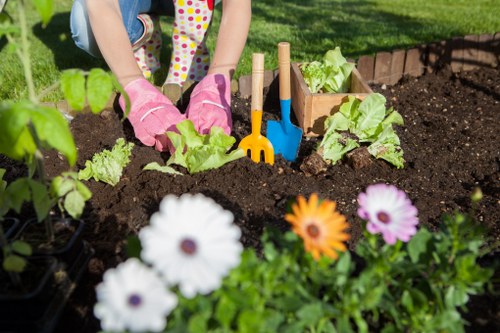 In our sustainable rubbish gardening area we emphasise resource recovery and reuse: soil improvement from compost, mulching materials from green waste, and repair and redistribution of tools and planters. We strongly encourage bringing separated materials to collection points rather than putting everything in residual bins, because source separation directly raises recycling efficiency and reduces contamination for processing at transfer stations.
Recycling percentage targets and performance
Gardening Beckenham has adopted a clear recycling percentage target to drive planning and investment. Our target is to reach a 60% recycling rate by 2030, with an interim goal of 50% by 2026. These targets reflect both ambitions for botanical waste streams and alignment with borough-level climate commitments. We publish progress updates and encourage community groups to measure diversion from landfill in their own plots and green spaces.To meet these targets we coordinate with local transfer stations and material recovery facilities (MRFs). While transfer sites vary across south London, our routine operations use borough transfer points and neighbouring civic amenity sites to consolidate loads, sort mixed streams and deliver materials to specialist processors for composting, anaerobic digestion and high-quality recycling.
Low-carbon vans and sustainable collections
Our fleet policy emphasises low-emission logistics. Gardening Beckenham operates a mix of electric and hybrid vans for collections and drop-offs, and we trial cargo bikes for short-distance deliveries and small loads. By converting to low-carbon vans and optimising collection routes we reduce emissions from our sustainable rubbish gardening area operations and encourage sustainable practice among volunteers and contractors.Partnerships with charities and community reuse
 We actively partner with local and national charities to give usable gardening materials a second life. Organisations we work with include community reuse centres, charity shops and national partners such as Emmaus and the British Heart Foundation when appropriate. Local charity partnerships help us redistribute usable planters, tools and seed stock to community allotments, schools and households in need.
Our charity collaborations also support training and volunteering: charity-run workshops, tool repair sessions and composting demonstrations reduce waste and build local skills. We do not sell or export residual garden waste as a shortcut; instead, materials that can be reused are processed through our charity partners or community projects to keep value in the local economy.
 The borough's approach to waste separation is reinforced by visible collection points within the eco-friendly waste disposal area: clear signage, labelled containers and seasonal guidance make it easier to participate. Common accepted items in our sustainable gardening streams include:
- Grass cuttings and hedge trimmings (for windrow or in-vessel composting)
- Woody pruning material and small branches (chip and mulch production)
- Vegetable peelings and food scraps (for anaerobic digestion or community compost heaps)
- Reusable pots, wooden stakes and metal tools (to charity partners)
How Gardening Beckenham supports a circular neighbourhood
The long-term vision is a circular approach where garden waste and household organics are captured locally, processed into compost and returned to allotments and community gardens, closing the loop on nutrients. We track waste streams and report against our recycling percentage target to ensure continuous improvement and transparency. Our emphasis is on practical, community-led action rather than complex bureaucracy: small changes in how gardeners separate and dispose of materials add up to measurable environmental benefit.We encourage local groups to work with nearby transfer stations and charity partners to increase reuse flows. By prioritising reuse and local processing — and by using low-emission vehicles where possible — Gardening Beckenham reduces the carbon footprint of waste operations and supports resilient neighbourhood green spaces. Our pledge includes continual investment in electric vehicles, route optimisation and community education to make the eco-friendly waste disposal area a model of sustainable urban gardening.
Join the effort: help us reach and exceed our recycling targets by separating waste at source, donating usable items to partner charities and supporting local composting. Together we can make the sustainable rubbish gardening area an engine for community regeneration, biodiversity and lower emissions across Beckenham.